Holly's Homestead — Propagation & Seedlings
Saving Seeds
Grow next year's crop from this year's best plants
DIFFICULTY Moderate
TYPE Seasonal technique
TIME Varies — from minutes to a season
TYPE Seasonal technique
TIME Varies — from minutes to a season
Difficulty
Moderate
Time
Varies by crop
Cost
Free
Best Season
At harvest / end of season
Frequency
Annual
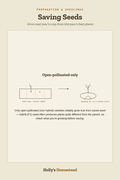
01Open-pollinated only
Only open-pollinated (non-hybrid) varieties reliably grow true from saved seed — hybrid (F1) seed often produces plants quite different from the parent, so check what you're growing before saving.
02What you'll need
- Open-pollinated or heirloom varieties
- Paper envelopes or jars for storage
- A cool, dry, dark storage spot
- Labels with variety name and year
03Method
- 1. Confirm the variety is open-pollinated, not a hybrid.
- 2. Let seed pods, heads, or fruit mature fully on the plant — well past the eating stage for many crops.
- 3. Harvest and dry seed thoroughly before storage — damp seed rots or moulds.
- 4. Clean off chaff and plant debris where practical.
- 5. Store in a labelled envelope or jar somewhere cool, dry, and dark.
04Troubleshooting
- Seed doesn't grow true to type — likely a hybrid variety, or cross-pollination occurred with a related plant nearby.
- Seed rots in storage — wasn't fully dry before storing; ensure thorough drying first.
- Poor germination next season — seed viability varies by crop; some (like onion) decline quickly, others (like tomato) last years.
- Accidental cross-pollination — isolate varieties of the same species if growing more than one for seed.
05Timing & maintenance
Best time
At the natural end of each crop's cycle, once seed is fully mature.
Duration
Seed viability varies widely — a season for some, many years for others.
Maintenance
Check stored seed periodically for moisture or pest issues.
Signs of success
Seed pods rattle when dry, or seed separates easily from fruit and feels hard, not soft.
06Tips & variations
Pairs well with
Direct Sowing BasicsCommon mistakes
Saving seed from hybrid (F1) varieties expecting true-to-type resultsStoring seed before it's fully dryPro tip
Start with easy, naturally self-pollinating crops like beans, peas, tomatoes, and lettuce — much lower risk of unwanted cross-pollination.