Food safety note: incorrect canning or preserving method, timing, or acidity can allow harmful bacteria (including botulism) to survive. Always follow a tested, reputable process exactly for this specific food — this isn't an area to improvise. See our Terms of Use for more.
Holly's Homestead — Preserving & Storage
Root Cellaring
Store root crops and produce using cool, dark conditions alone
DIFFICULTY Easy–moderate
TYPE One-off setup, ongoing use
TIME A weekend to set up a space
TYPE One-off setup, ongoing use
TIME A weekend to set up a space
Difficulty
Easy–moderate
Time
Setup: 1 day
Cost
Low
Best Season
Autumn harvest, used through winter
Frequency
Ongoing through storage season
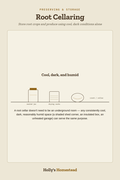
01Cool, dark, and humid
A root cellar doesn't need to be an underground room — any consistently cool, dark, humid space (a shaded shed corner, an insulated box, an unheated garage) works.
02What you'll need
- A cool, dark space (ideally 0–4°C for long-term storage)
- Boxes or crates, ideally with damp sand or sawdust for some crops
- Good airflow to prevent mould
- Undamaged, unwashed produce for storage
03Method
- 1. Choose the coolest, darkest available space with reasonably stable temperature.
- 2. Harvest root crops carefully to avoid bruising or cutting, and don't wash before storing.
- 3. Layer crops like carrots in damp sand or sawdust in a crate to prevent them drying out.
- 4. Store crops like onions and garlic differently — hanging or in mesh bags with good airflow, not damp sand.
- 5. Check stored produce periodically and remove anything showing rot before it spreads.
04Troubleshooting
- Produce shrivelling — storage space too dry; increase humidity slightly, or use the damp sand method for root crops.
- Mould or rot spreading — check for damaged produce going in, and ensure adequate airflow; remove affected items promptly.
- Space too warm — look for a cooler location, or consider it only suitable for shorter-term storage.
- Produce sprouting — normal for potatoes and onions over time in storage; use them before this becomes significant, or store at colder temperatures to slow it.
05Timing & maintenance
Best time
Set up before the main autumn harvest so crops go straight into storage.
Duration
Well-stored root crops can keep for several months over winter.
Maintenance
Check stored produce every few weeks, removing anything spoiling.
Signs of success
Produce staying firm, unshrivelled, and rot-free well into the storage season.
06Tips & variations
Pairs well with
FermentingDehydratingCommon mistakes
Washing produce before storage, which speeds spoilageStoring bruised or damaged produce alongside good producePro tip
Onions and potatoes should never be stored together — onions release gases that shorten potato storage life.