Food safety note: incorrect canning or preserving method, timing, or acidity can allow harmful bacteria (including botulism) to survive. Always follow a tested, reputable process exactly for this specific food — this isn't an area to improvise. See our Terms of Use for more.
Holly's Homestead — Preserving & Storage
Canning & Bottling
Preserve produce in sealed jars for long shelf-stable storage
DIFFICULTY Moderate
TYPE Seasonal batch technique
TIME 2–4 hours per batch
TYPE Seasonal batch technique
TIME 2–4 hours per batch
Difficulty
Moderate
Time
2–4 hrs/batch
Cost
Moderate (equipment, then low)
Best Season
At harvest peaks
Frequency
Several batches per season
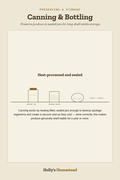
01Heat-processed and sealed
Canning works by heating filled, sealed jars enough to destroy spoilage organisms and create a vacuum seal as they cool — done correctly, this makes produce shelf-stable for a year or more.
02What you'll need
- Mason-style jars with new lids
- A water bath canner (for high-acid foods) or pressure canner (for low-acid foods)
- A jar lifter and canning funnel
- A tested, reliable recipe/process for the specific food
03Method
- 1. Use a tested recipe for the food's acidity — this determines water bath or pressure canning.
- 2. Sterilise jars and prepare produce according to the recipe.
- 3. Fill jars, leaving the correct headspace, and remove air bubbles.
- 4. Wipe rims clean, apply lids, and process in the canner for the specified time.
- 5. Cool, check seals (lids shouldn't flex), and label with the date before storing.
04Troubleshooting
- Jars don't seal — check for nicks on the jar rim, insufficient processing time, or old lids; reprocess or refrigerate and use promptly instead.
- Cloudy liquid or floating produce — often cosmetic rather than unsafe, but check the seal and smell before use.
- Low-acid foods processed in a water bath — a safety risk; low-acid foods (most vegetables, meat) require pressure canning, not water bath.
- Mould or off smell on opening — discard without tasting; when in doubt, throw it out.
05Timing & maintenance
Best time
At the peak of each crop's harvest, when there's a surplus to preserve.
Duration
Each batch takes a few hours; properly sealed jars keep 12+ months in a cool, dark cupboard.
Maintenance
Check stored jars periodically for seal failure or spoilage signs.
Signs of success
A firm, sealed lid that doesn't flex when pressed, and clear (not cloudy or bubbling) contents.
06Tips & variations
Pairs well with
FermentingFreezing ProduceCommon mistakes
Water bath canning low-acid foods that actually require pressure canningReusing old lids that no longer seal reliablyPro tip
Always follow a tested, reputable recipe for canning specifically — home food safety isn't the place to improvise ratios or processing times.