Holly's Homestead — Garden Systems & Structures
No-Dig Gardening
Build fertile beds by layering, without turning the soil
DIFFICULTY Easy
TYPE One-off build, ongoing maintenance
TIME Half a day per bed
TYPE One-off build, ongoing maintenance
TIME Half a day per bed
Difficulty
Easy
Time
Half a day/bed
Cost
Low–moderate
Best Season
Any time, ideally autumn for a spring bed
Frequency
Topped up each season
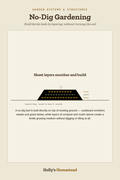
01Sheet layers smother and build
A no-dig bed is built directly on top of existing ground — cardboard smothers weeds and grass below, while layers of compost and mulch above create a fertile growing medium without digging or tilling at all.
02What you'll need
- Cardboard (uncoated, tape removed) or newspaper
- Compost, aged manure, or a soil mix
- Straw or another mulch for the top layer
- Optional: a timber or other edging to contain the bed
03Method
- 1. Mow or slash existing growth low, then lay cardboard directly over the area, overlapping generously.
- 2. Wet the cardboard thoroughly to help it break down and stay in place.
- 3. Layer compost and aged manure on top, building up to at least 15–20cm depth.
- 4. Top with a mulch layer to retain moisture and suppress any weeds pushing through gaps.
- 5. Plant directly into the top layer — seedlings work better than direct-sown seed in the first season while the layers are still settling.
04Troubleshooting
- Weeds coming through — gaps in the cardboard layer; overlap more generously next time, or patch gaps with extra cardboard.
- Bed sinking significantly — normal as layers settle and compost breaks down; top up each season.
- Poor growth in the first season — layers may not have broken down enough yet; established no-dig beds generally improve markedly by year two.
- Persistent perennial weeds (like couch grass) coming through — a single cardboard layer may not be enough for very vigorous weeds; consider extra suppression measures first.
05Timing & maintenance
Best time
Autumn is ideal, giving the layers time to break down before spring planting, though it can be built any time.
Duration
Initial build takes half a day; the bed improves and matures over the following seasons.
Maintenance
Top up compost and mulch each season as layers settle and break down.
Signs of success
Rich, dark, crumbly soil developing at the cardboard interface, and strong plant growth without ever having dug the bed.
06Tips & variations
Pairs well with
Raised Bed BuildingMulchingCommon mistakes
Leaving gaps in the cardboard layer that let weeds throughNot building the compost layer deep enough for good results in the first seasonPro tip
Start a no-dig bed in autumn over an area you want cleared for spring — it doubles as weed suppression while it builds fertility.