Holly's Homestead — Root Vegetable
Swede
Brassica napus · Brassica family
DIFFICULTY Easy
TYPE Biennial, grown as annual, direct sown
MATURITY 80–100 days
TYPE Biennial, grown as annual, direct sown
MATURITY 80–100 days
Sun
Full sun
Water
Consistent
Soil pH
6.0–6.8
Spacing
20cm × 35cm
Depth
1–2cm
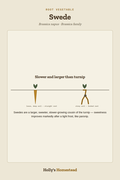
01Slower and larger than turnip
Swedes are a larger, sweeter, slower-growing cousin of the turnip — sweetness improves markedly after a light frost, like parsnip.
02Planting
Method
Direct sow, thin as seedlings develop.
Soil
Deep, loose, moderately fertile.
Timing
Sow in late spring to early summer for an autumn/winter harvest.
Planting timing varies significantly by Australian climate zone. Set your zone above (or use the Find My Climate Zone tool) for guidance tailored to your own area.
03Growing care
- Thin to final spacing once seedlings are established.
- Water consistently — irregular watering causes woody centres.
- Mulch to retain even soil moisture.
- Leave in the ground after a light frost for extra sweetness.
04Problems
- Flea beetle — holes in leaves; net young plants.
- Clubroot — same risk as other brassicas; rotate beds.
- Woody centre — inconsistent watering or over-maturity.
- Boron deficiency — brown heart; feed with compost or seaweed tonic.
05Harvest & storage
Signs
Roots reach 10–15cm across, sweeter after frost.
Method
Loosen soil with a fork before pulling.
Curing
None needed.
Storage
Cool, dark, humid spot. Keeps 2–3 months.
Preserving
See Root Cellaring (cool, dark storage without processing) for ways to keep a harvest surplus.
06Companions & rotation
Plant nearby
PeasOnionAvoid nearby
Other brassicas nearbyRotation note
Rotate brassicas on a 3–4 year cycle.