Holly's Homestead — Root Vegetable
Parsnip
Pastinaca sativa · Carrot family
DIFFICULTY Moderate
TYPE Biennial, grown as annual, direct sown
MATURITY 100–120 days
TYPE Biennial, grown as annual, direct sown
MATURITY 100–120 days
Sun
Full sun
Water
Consistent
Soil pH
6.0–6.8
Spacing
10cm × 30cm
Depth
1–2cm
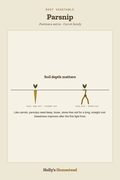
01Soil depth matters
Like carrots, parsnips need deep, loose, stone-free soil for a long, straight root. Sweetness improves after the first light frost.
02Planting
Method
Direct sow — seed loses viability fast, so use fresh seed each year.
Soil
Deep, loose, stone-free to 30cm.
Timing
Sow in early spring; slow to germinate (2–3 weeks).
Planting timing varies significantly by Australian climate zone. Set your zone above (or use the Find My Climate Zone tool) for guidance tailored to your own area.
03Growing care
- Thin to 10cm apart once seedlings are established.
- Keep soil consistently moist — dry spells cause woody roots.
- Mulch to suppress weeds around the slow-growing tops.
- Leave in the ground after frost — cold sweetens the flavour.
04Problems
- Canker — dark rot on the shoulder; improve drainage, avoid excess nitrogen.
- Forking — from stony or compacted soil.
- Carrot fly — same pest as carrots; use fine mesh.
- Slow, patchy germination — always sow fresh seed.
05Harvest & storage
Signs
Roots reach 15–20cm, especially sweet after a frost.
Method
Fork gently from the side to avoid snapping the root.
Curing
None needed.
Storage
Can stay in the ground over winter, or fridge 2–4 weeks.
Preserving
See Root Cellaring (cool, dark storage without processing) for ways to keep a harvest surplus.
06Companions & rotation
Plant nearby
OnionGarlicPeasAvoid nearby
Carrot (competes for same root depth)Rotation note
Rotate with legumes; avoid following other root crops for 2 years.