Holly's Homestead — Perennial Herb
Sage
Salvia officinalis · Mint family
DIFFICULTY Easy
TYPE Evergreen perennial shrub
MATURITY Usable from 8–10 weeks
TYPE Evergreen perennial shrub
MATURITY Usable from 8–10 weeks
Sun
Full sun
Water
Low–moderate
Soil pH
6.0–7.0
Spacing
45–60cm
Depth
as per pot
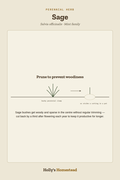
01Prune to prevent woodiness
Sage bushes get woody and sparse in the centre without regular trimming — cut back by a third after flowering each year to keep it productive for longer.
02Planting
Method
Plant from a nursery pot, or strike cuttings.
Soil
Free-draining, moderately fertile.
Timing
Plant in spring or autumn.
Planting timing varies significantly by Australian climate zone. Set your zone above (or use the Find My Climate Zone tool) for guidance tailored to your own area.
03Growing care
- Water moderately — sage dislikes constantly wet soil.
- Prune hard after flowering to prevent woodiness.
- Mulch lightly, kept clear of the base.
- Replace plants every 4–5 years once they get very woody.
04Problems
- Root rot — from poor drainage; ensure it's not sitting wet.
- Powdery mildew — humid, crowded conditions; space well.
- Woody, sparse growth — lack of pruning; trim annually.
- Spider mite — hot, dry weather; occasional hose down.
05Harvest & storage
Signs
Usable year-round once established.
Method
Snip leaves or sprigs as needed.
Curing
Air-dry hanging in small bunches.
Storage
Fresh in the fridge 1–2 weeks; dried, airtight for a year or more.
Preserving
See Dehydrating (drying woody herbs for storage) for ways to keep a harvest surplus.
06Companions & rotation
Plant nearby
CabbageCarrotStrawberryAvoid nearby
CucumberRotation note
Not applicable — long-lived shrub.