Food safety note: incorrect canning or preserving method, timing, or acidity can allow harmful bacteria (including botulism) to survive. Always follow a tested, reputable process exactly for this specific food — this isn't an area to improvise. See our Terms of Use for more.
Holly's Homestead — Preserving & Storage
Dehydrating
Remove moisture to preserve produce at room temperature
DIFFICULTY Easy
TYPE Seasonal batch technique
TIME 4–24 hours per batch
TYPE Seasonal batch technique
TIME 4–24 hours per batch
Difficulty
Easy
Time
4–24 hrs/batch
Cost
Low–moderate (dehydrator)
Best Season
At harvest peaks
Frequency
Several batches per season
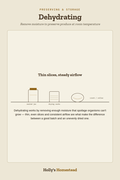
01Thin slices, steady airflow
Dehydrating works by removing enough moisture that spoilage organisms can't grow — thin, even slices and consistent airflow are what make the difference between a good batch and an unevenly dried one.
02What you'll need
- A food dehydrator, or an oven on its lowest setting with the door ajar
- A sharp knife or mandoline for even slicing
- Airtight storage containers for the finished product
03Method
- 1. Wash and slice produce evenly and thinly — consistency matters more than the exact thickness.
- 2. Pretreat if needed (e.g. a brief blanch for vegetables, a lemon dip for fruit prone to browning).
- 3. Arrange in a single layer with space between pieces for airflow.
- 4. Dehydrate at the appropriate temperature for the food, checking periodically.
- 5. Cool completely before storing in an airtight container — any residual warmth causes condensation and spoilage.
04Troubleshooting
- Uneven drying — inconsistent slice thickness; aim for uniform pieces, and rotate trays if using an oven.
- Mould after storage — not fully dried before storing, or stored while still warm; ensure produce is completely dry and cool first.
- Leathery instead of crisp — often still has some residual moisture; extend drying time.
- Off flavours — some produce benefits from pretreatment (blanching, acid dip) to preserve colour and flavour; research the specific food.
05Timing & maintenance
Best time
At harvest peaks, especially for fruit and produce with a short fresh shelf life.
Duration
4–24 hours per batch depending on the food and method.
Maintenance
None once dried and stored correctly — check periodically for any moisture getting in.
Signs of success
Produce is leathery to brittle depending on the food, with no cool or damp spots remaining.
06Tips & variations
Pairs well with
Root CellaringFreezing ProduceCommon mistakes
Storing before produce and containers have fully cooledSlicing unevenly, leading to some pieces over-dried and others under-driedPro tip
Tomatoes, herbs, and stone fruit are particularly rewarding first projects — the flavour concentration from drying is dramatic.