Holly's Homestead — Nut Tree
Chestnut
Castanea sativa · Beech family
DIFFICULTY Moderate
TYPE Deciduous perennial tree
MATURITY 4–7 years to first useful crop
TYPE Deciduous perennial tree
MATURITY 4–7 years to first useful crop
Sun
Full sun
Water
Regular while establishing
Soil pH
5.5–6.5
Spacing
8–12m
Depth
as per pot
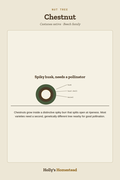
01Spiky husk, needs a pollinator
Chestnuts grow inside a distinctive spiky burr that splits open at ripeness. Most varieties need a second, genetically different tree nearby for good pollination.
02Planting
Method
Plant from a potted or bare-root tree.
Soil
Well-drained, slightly acidic — dislikes alkaline soil.
Timing
Plant in winter while dormant.
Planting timing varies significantly by Australian climate zone. Set your zone above (or use the Find My Climate Zone tool) for guidance tailored to your own area.
03Growing care
- Plant at least two different varieties for reliable pollination.
- Water regularly while establishing.
- Mulch well to retain soil moisture.
- Prune minimally once established.
04Problems
- Chestnut blight — a serious disease in some regions; source disease-resistant varieties locally.
- Codling moth/weevil — can affect developing nuts.
- Poor pollination — needs a genetically different second tree nearby.
- Alkaline soil chlorosis — yellowing leaves; keep soil pH on the acidic side.
05Harvest & storage
Signs
Burrs split open and nuts drop naturally, typically autumn.
Method
Collect fallen nuts promptly, wearing gloves for the spiky husks.
Curing
Cure in a cool, airy spot for 1–2 weeks before storing.
Storage
Cool, humid spot (unlike most nuts) — chestnuts dry out if kept too dry; keeps weeks to a couple of months, longer refrigerated or frozen.
Preserving
See Dehydrating (curing nuts fully before storage) for ways to keep a harvest surplus.
06Companions & rotation
Plant nearby
Nothing needing full sun close byAvoid nearby
Alkaline garden beds nearbyRotation note
Not applicable — long-lived perennial tree.