Holly's Homestead — Nut Tree
Brazil Nuts
Bertholletia excelsa · Brazil nut family
DIFFICULTY Demanding
TYPE Large evergreen rainforest tree
MATURITY 10–15+ years to first crop
TYPE Large evergreen rainforest tree
MATURITY 10–15+ years to first crop
Sun
Full sun once established
Water
Regular, high rainfall
Soil pH
4.5–6.5
Spacing
10–15m
Depth
Same depth as in the pot
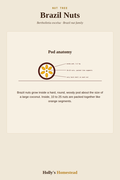
01Pod anatomy
Brazil nuts grow inside a hard, round, woody pod about the size of a large coconut. Inside, 10 to 25 nuts are packed together like orange segments.
02Planting
Method
Plant a nursery-grown seedling into deep, rich soil at the same depth as in its pot, with shade and wind shelter for the first two years.
Soil
Deep, rich, moist but well-drained, slightly acid soil with plenty of organic matter.
Timing
Plant at the start of the wet season, once cold nights and frost are no concern.
Reality check
Wet Tropics only. Brazil nut trees depend on large forest bees for pollination, and reliable crops in Australia are not well documented. Treat it as a long-term experiment.
Planting timing varies significantly by Australian climate zone. Set your zone above (or use the Find My Climate Zone tool) for guidance tailored to your own area.
03Growing care
- Keep soil consistently moist; young trees dislike dry spells.
- Mulch deeply and keep grass back from the trunk.
- Shade seedlings from harsh sun for the first year or two, then expose them gradually.
- Allow plenty of room — mature trees can top 30m with a wide crown.
04Problems
- Frost and cold — tender; not suited to anywhere with regular frost or cool winters.
- Poor or no nut set — pollination depends on large bees from the Amazon; trees may flower but set little or no fruit without them.
- Slow growth — seeds can take a year or more to sprout and trees many years to bear; buy a nursery seedling.
- Falling pods — heavy woody pods drop from a great height; never stand or park beneath a fruiting tree.
05Harvest & storage
Signs
Whole woody pods drop to the ground when ripe, usually in the wet season, about 14 months after flowering.
Method
Collect fallen pods promptly and open them carefully with a machete or strong knife.
Curing
Rinse the nuts, discard any that float, smell musty or look mouldy, then dry in-shell in a warm airy spot for 1–2 weeks.
Storage
In-shell, cool and dry, 6–12 months. Shelled kernels turn rancid quickly, so freeze them for longer.
Eating
Very high in selenium — one or two nuts a day is plenty.
Preserving
See Dehydrating (drying nuts fully before storage) for ways to keep a harvest surplus.
06Companions & rotation
Plant nearby
BananaNative groundcoversAvoid nearby
Close tree plantingRotation note
Not applicable — long-lived perennial tree.