Holly's Homestead — Medicinal
Lavender
Lavandula angustifolia · Lamiaceae
DIFFICULTY Easy
TYPE Evergreen perennial shrub
MATURITY 1–2 years to good flowering
TYPE Evergreen perennial shrub
MATURITY 1–2 years to good flowering
Sun
Full sun
Water
Low, drought tolerant once established
Soil pH
6.5–7.5
Spacing
0.5–1m
Depth
as per pot
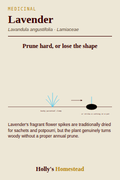
01Prune hard, or lose the shape
Lavender's fragrant flower spikes are traditionally dried for sachets and potpourri, but the plant turns woody and sparse within a couple of seasons without a proper annual prune — cut back hard after flowering to keep it dense rather than leggy.
02Planting
Method
Plant from a nursery pot, or strike cuttings.
Soil
Free-draining, moderately fertile.
Timing
Plant in spring or autumn.
Planting timing varies significantly by Australian climate zone. Set your zone above (or use the Find My Climate Zone tool) for guidance tailored to your own area.
03Growing care
- Water moderately while establishing; drought tolerant once settled in.
- Prune hard after flowering to prevent woodiness.
- Mulch lightly with gravel or sand, kept clear of the base.
- Replace plants every 4–5 years once they get very woody.
04Problems
- Root rot — from poor drainage; ensure it's not sitting wet.
- High humidity — dislikes humid conditions; space well for airflow.
- Woody, sparse growth — lack of pruning; trim annually after flowering.
- Spider mite — hot, dry weather; occasional hose down.
05Harvest & storage
Signs
Ready when the lower flowers on each spike have just opened, usually late spring to summer.
Method
Cut whole flower spikes with several centimetres of stem attached.
Curing
Air-dry hanging upside down in small bunches, out of direct sun.
Storage
Dried flowers keep for a year or more in an airtight container.
Preserving
See Dehydrating for ways to keep a harvest surplus.
06Companions & rotation
Plant nearby
BrassicasRosesOther Mediterranean herbsAvoid nearby
Few restrictions
Rotation note
Not applicable — long-lived shrub.