Holly's Homestead — Grain & Staple
Sorghum
Sorghum bicolor · Grass family
DIFFICULTY Moderate
TYPE Annual, warm-season, direct sown
MATURITY 14–20 weeks
TYPE Annual, warm-season, direct sown
MATURITY 14–20 weeks
Sun
Full sun
Water
Low–moderate, drought-tolerant once established
Soil pH
5.5–7.5
Spacing
10cm apart, rows 50cm apart
Depth
2–4cm
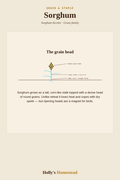
01The grain head
Sorghum grows as a tall, corn-like stalk topped with a dense head of round grains. Unlike wheat it loves heat and copes with dry spells — but ripening heads are a magnet for birds.
02Planting
Method
Sow seed in rows once the soil is warm, then thin seedlings to 10–15cm apart.
Soil
Free-draining, moderately fertile. Tolerates poorer, drier soil and a wider pH range than corn.
Timing
Sow in spring to early summer once soil is reliably above 18°C (around September–December in the subtropics, October–December further south).
Planting timing varies significantly by Australian climate zone. Set your zone above (or use the Find My Climate Zone tool) for guidance tailored to your own area.
03Growing care
- Water until established, then it copes with dry spells; water during head fill in hot weather.
- Weed well for the first 4–6 weeks while seedlings are small.
- Dig in compost before sowing — heavy nitrogen delays ripening and encourages lodging.
- Bag heads in paper or mesh as the grain fills to protect them from birds.
04Problems
- Birds — parrots, finches and cockatoos target ripening heads; bag or net them.
- Head pests — sorghum midge and caterpillars damage developing grain in warm, humid areas; sow on time and check heads at flowering.
- Aphids — sticky honeydew and sooty mould on leaves; encourage predators or wash off with water.
- Toxic to grazing animals — young, drought- or frost-stressed sorghum can contain prussic acid; never graze or feed it fresh to livestock.
05Harvest & storage
Signs
Grain is plump, full-coloured and too hard to dent with a fingernail, several weeks after flowering.
Method
Cut heads with a length of stem, dry in a shed 1–2 weeks, then rub or thresh the grain free and winnow.
Curing
Dry grain until it is hard and brittle — damp grain moulds in storage.
Storage
Whole grain, cool, dry and airtight, 1–2+ years. Milled flour keeps only a few months.
Preserving
See Dehydrating (drying grain fully for storage) for ways to keep a harvest surplus.
06Companions & rotation
Plant nearby
BeansPumpkinAvoid nearby
Small-seeded crops sown straight afterRotation note
Rotate with legumes. Leave a few weeks between slashing sorghum and sowing small-seeded crops, as the residue can slow germination.