Holly's Homestead — Grain & Staple
Oats
Avena sativa · Grass family
DIFFICULTY Moderate
TYPE Annual, cool-season, direct sown
MATURITY 24–32 weeks
TYPE Annual, cool-season, direct sown
MATURITY 24–32 weeks
Sun
Full sun
Water
Moderate, low near maturity
Soil pH
5.5–7.0
Spacing
Broadcast or 15cm rows
Depth
2–4cm
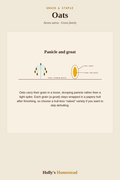
01Panicle and groat
Oats carry their grain in a loose, drooping panicle rather than a tight spike. Each grain (a groat) stays wrapped in a papery hull after threshing, so choose a hull-less “naked” variety if you want to skip dehulling.
02Planting
Method
Broadcast sow or sow in 15cm rows, raking lightly to cover seed. Hull-less (naked) varieties thresh free of the husk.
Soil
Free-draining, moderately fertile loam. Oats tolerate slightly acid soil better than wheat or barley.
Timing
Sow in autumn to early winter (April–June in most zones) for a spring to early summer harvest.
Planting timing varies significantly by Australian climate zone. Set your zone above (or use the Find My Climate Zone tool) for guidance tailored to your own area.
03Growing care
- Water moderately while the crop grows, tapering off as the heads ripen.
- Weed early — a dense stand shades out most weeds once established.
- No routine feeding needed in reasonable soil; too much nitrogen encourages lodging.
- Net or scare birds as the grain fills, and keep stored grain away from rodents.
04Problems
- Rust — orange-brown pustules on leaves and stems; improve airflow and avoid sowing beside old cereal stubble.
- Barley yellow dwarf virus — yellowing or reddening leaves and stunting, spread by aphids; sow at the right time and control aphid build-up.
- Birds — can strip ripening heads; netting may be needed for a small planting.
- Lodging — stems falling over in wind or heavy rain near maturity; avoid over-feeding with nitrogen.
05Harvest & storage
Signs
Stalks and heads turn straw-gold and the grain is firm; a fingernail should not dent it.
Method
Cut the whole stand, dry fully, then thresh and winnow to separate grain from chaff.
Curing
Dry thoroughly before storage — damp grain heats and moulds quickly.
Storage
Whole oats or groats, cool, dry and airtight, 1 year or more. Home-rolled or milled oats keep only a few months.
Preserving
See Dehydrating (drying grain fully for storage) for ways to keep a harvest surplus.
06Companions & rotation
Plant nearby
Field peasVetchAvoid nearby
No strong known conflicts
Rotation note
Avoid following wheat, barley or other cereals, which carry over leaf and root diseases; follow legumes where possible.