Holly's Homestead — Poultry
Laying Hens
Gallus gallus domesticus · Layer breed
DIFFICULTY Easy
TYPE Poultry, kept for eggs
PRODUCTIVE LIFE Lays from 18–20 weeks, productive 2–4 years
TYPE Poultry, kept for eggs
PRODUCTIVE LIFE Lays from 18–20 weeks, productive 2–4 years
Space
0.3–0.4m² coop, 2m² run
Diet
Layer pellets + scraps + grit
Water
Fresh daily, ~250ml/bird
Temperament
Calm, easily handled
Lifespan
6–10 years
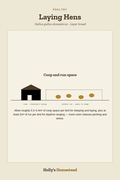
01Coop and run space
Allow roughly 0.3–0.4m² of coop space per bird for sleeping and laying, plus at least 2m² of run per bird for daytime ranging — more room reduces pecking and stress.
02Housing & setup
Shelter
Weatherproof coop with roosting bars and one nest box per 3–4 hens, raised off the ground.
Fencing
1.8m fencing or a covered run — hens fly reasonably well and foxes dig.
Bedding
Straw or wood shavings in nest boxes, changed regularly to control mites.
03Daily care
- Let out in the morning, lock in safely at dusk against predators.
- Provide fresh water and layer feed daily; supplement with kitchen scraps and greens.
- Collect eggs daily to discourage broodiness and egg-eating.
- Check for mites, and refresh bedding regularly.
04Health & problems
- Red mite — infest coop cracks at night; treat the coop, not just the birds.
- Egg drop — moulting, stress, or age; usually resolves on its own.
- Fox/predator loss — the single biggest risk; secure housing overnight is essential.
- Worms — worm periodically as part of routine care.
05Production & harvest
Yield
4–6 eggs per week per hen in peak lay, tapering with age and season.
Collection
Daily, ideally more than once to reduce breakage and egg-eating.
Peak season
Spring–summer; lay slows over winter without supplementary light.
Storage
Unwashed eggs keep several weeks at room temperature, or longer refrigerated.
Recipes
Try our Classic Frittata — a way to use a glut.
06Compatibility & considerations
Good with
DucksGuinea fowlVegetable garden (manure)Avoid keeping with
Unsecured dogsRoosters if noise is a concernNote
Check local council rules on flock size and rooster ownership before scaling up.