Holly's Homestead — Poultry
Ducks
Anas platyrhynchos domesticus · Dual-purpose breed
DIFFICULTY Easy
TYPE Poultry, kept for eggs and/or meat
PRODUCTIVE LIFE Lays from 5–7 months, productive several years
TYPE Poultry, kept for eggs and/or meat
PRODUCTIVE LIFE Lays from 5–7 months, productive several years
Space
0.4m² shelter, 2–4m² run with water access
Diet
Waterfowl or poultry pellets + foraged slugs/greens
Water
Constant access, plus a tub for dabbling
Temperament
Calm, hardy, good foragers
Lifespan
8–12 years
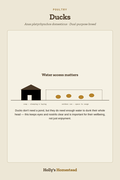
01Water access matters
Ducks don't need a pond, but they do need enough water to dunk their whole head — this keeps eyes and nostrils clear and is important for their wellbeing, not just enjoyment.
02Housing & setup
Shelter
Simple, draft-free shelter; ducks are hardier in wet weather than chickens.
Fencing
Lower fencing usually sufficient — most breeds don't fly well.
Bedding
Straw, changed often as ducks are messier and wetter than chickens.
03Daily care
- Provide a tub or shallow pond deep enough to submerge the head.
- Let out to forage — ducks are excellent at slug and snail control.
- Feed a waterfowl-appropriate pellet, avoiding excess medicated chicken feed.
- Clean water areas regularly to avoid mud and disease build-up.
04Health & problems
- Muddy, fouled housing — manage water areas to avoid a permanent bog.
- Predator loss — secure housing overnight, as with chickens.
- Bumblefoot — from wet, dirty housing; keep bedding drier where birds rest.
- Egg-laying in odd spots — ducks often lay away from nest boxes; check the run each morning.
05Production & harvest
Yield
Up to 300+ eggs a year in good dual-purpose laying breeds.
Collection
Check the whole run each morning — ducks lay early and don't always use nest boxes.
Meat breeds
Meat-focused breeds are typically processed at 7–9 weeks.
Storage
Eggs: similar to hen eggs, several weeks unwashed. Meat: fridge a few days, freezes well.
06Compatibility & considerations
Good with
Vegetable garden (pest control)Chickens (with separate water access)Avoid keeping with
Areas without any water accessNote
Duck eggs are rich and excellent for baking; some people with egg sensitivities tolerate them better than hen eggs.