Holly's Homestead — Other Livestock
Sheep
Ovis aries · Meat/wool breed
DIFFICULTY Easy–moderate
TYPE Livestock, kept for meat and/or wool
PRODUCTIVE LIFE Meat breeds processed 4–12 months; wool breeds shorn annually for years
TYPE Livestock, kept for meat and/or wool
PRODUCTIVE LIFE Meat breeds processed 4–12 months; wool breeds shorn annually for years
Space
2–3m² shelter, 400m²+ grazing area per sheep
Diet
Pasture-based, hay in poor conditions, minimal grain needed
Water
Constant fresh access
Temperament
Calm, flock-oriented, skittish if handled roughly
Lifespan
10–12 years
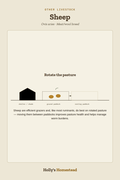
01Rotate the pasture
Sheep are efficient grazers and, like most ruminants, do best on rotated pasture — moving them between paddocks improves pasture health and helps manage worm burdens.
02Housing & setup
Shelter
Simple shelter or shade — sheep are generally hardy and need less housing than pigs or goats.
Fencing
Standard stock fencing; sheep are less prone to escaping than goats.
Bedding
Straw if housed overnight, though many setups rely mainly on shelter belts and shade.
03Daily care
- Rotate grazing paddocks to manage pasture and parasite load.
- Provide hay when pasture is poor, especially over summer dry spells or winter.
- Shear annually if keeping a wool breed.
- Keep in groups — sheep are strongly flock-oriented and stressed when alone.
04Health & problems
- Worms — manage with pasture rotation and monitoring; resistance is a growing issue, so avoid over-reliance on drenching alone.
- Flystrike — particularly in wool breeds in warm, humid weather; regular checks and shearing help prevent it.
- Footrot — in wet conditions; keep ground as dry as practical and trim hooves as needed.
- Predator risk to lambs — secure paddocks at lambing time.
05Production & harvest
Processing age
4–12 months for meat breeds depending on target size.
Wool
Shorn annually, typically spring, for wool breeds.
Yield
Roughly 40–50% of live weight as dressed meat.
Storage
Meat: fridge a few days, freezes well. Wool: store clean and dry until processed or sold.
06Compatibility & considerations
Good with
Other sheep (flock animals)Orchard grazing (light, with trunk protection)Avoid keeping with
Being kept aloneVery wet, poorly drained paddocks (footrot risk)Note
A good low-input grazing animal if you have pasture area to spare beyond the vegetable and orchard zones.