Holly's Homestead — Soil & Compost
Worm Farming (Vermicomposting)
Turn scraps into rich castings using composting worms
DIFFICULTY Easy
TYPE Ongoing system
TIME 2–3 months to first harvest
TYPE Ongoing system
TIME 2–3 months to first harvest
Difficulty
Easy
Time
2–3 months
Cost
Low–moderate (worms + bin)
Best Season
Year-round, sheltered from extremes
Frequency
Feed weekly
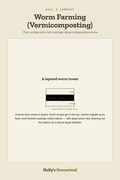
01A layered worm tower
A worm farm works in layers: fresh scraps go in the top, worms migrate up to feed, and finished castings collect below — with liquid worm 'tea' draining out the bottom as a bonus liquid fertiliser.
02What you'll need
- A worm farm bin (tiered or single) or a DIY bin with drainage
- Composting worms (tiger worms or red wrigglers — not ordinary garden earthworms)
- Bedding material (damp shredded paper or coconut coir)
- A steady supply of kitchen scraps
03Method
- 1. Set up the bin with moist bedding material as a starting base.
- 2. Add worms and let them settle for a few days before feeding heavily.
- 3. Feed small amounts of chopped kitchen scraps weekly, burying them slightly under bedding.
- 4. Keep the bin shaded and moist — worms are sensitive to heat, cold, and drying out.
- 5. Harvest castings every 2–3 months once a layer has matured, and drain liquid worm tea regularly.
04Troubleshooting
- Worms dying off — usually too hot, too wet, too dry, or overfed; check conditions and reduce feeding.
- Bad smell — overfeeding or anaerobic conditions; feed less, improve drainage and airflow.
- Fruit flies — bury scraps properly under bedding rather than leaving them exposed.
- Worms trying to escape — usually a sign conditions are wrong (too wet, too acidic, too hot); check and adjust.
05Timing & maintenance
Best time
Set up any time; keep the bin in a shaded, temperature-moderate spot year-round.
Duration
First harvestable castings typically after 2–3 months of steady feeding.
Maintenance
Weekly feeding, occasional moisture checks, and periodic harvesting.
Signs of success
Dark, crumbly castings building up, with worms concentrated in the fresher feeding layer above.
06Tips & variations
Pairs well with
Hot CompostingCompost TeaCommon mistakes
Overfeeding, leading to a smelly, anaerobic binLeaving the bin in full sun, overheating the wormsPro tip
Worm castings and worm tea are both excellent, concentrated additions — dilute worm tea before applying it directly to plants.