Holly's Homestead — Soil & Compost
Compost Tea
A liquid feed brewed from finished compost
DIFFICULTY Easy
TYPE One-off batch, repeated as needed
TIME 24–48 hours to brew
TYPE One-off batch, repeated as needed
TIME 24–48 hours to brew
Difficulty
Easy
Time
24–48 hrs
Cost
Low
Best Season
Growing season
Frequency
Every 2–4 weeks
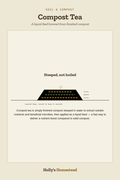
01Steeped, not boiled
Compost tea is simply finished compost steeped in water to extract soluble nutrients and beneficial microbes, then applied as a liquid feed — a fast way to deliver a nutrient boost compared to solid compost.
02What you'll need
- Finished, mature compost or worm castings
- A bucket or barrel
- A porous bag or old pillowcase to hold the compost (optional but keeps it strainable)
- An aquarium pump for aeration (optional, improves quality)
03Method
- 1. Fill a porous bag with 1–2 handfuls of finished compost per litre of water, or add loose compost directly.
- 2. Submerge in a bucket of water — rainwater or dechlorinated tap water is best.
- 3. Steep for 24–48 hours, stirring occasionally, or aerate with a pump for better results.
- 4. Strain out solids if not using a bag.
- 5. Dilute if concentrated, and apply directly to soil or as a light foliar spray.
04Troubleshooting
- Smells bad/anaerobic — brewed too long or without enough airflow; use within 48 hours and aerate if possible.
- No visible benefit — compost tea is a supplement, not a substitute for good soil-building; use alongside, not instead of, regular compost.
- Clogged sprayer — strain thoroughly before using in a spray applicator.
- Over-application — more isn't better; stick to a light, regular feeding rhythm rather than heavy, infrequent doses.
05Timing & maintenance
Best time
Throughout the growing season, timed with active growth phases.
Duration
Each batch brews in 24–48 hours and should be used fresh, within a day or two.
Maintenance
Brew a fresh batch every few weeks rather than trying to store it — it doesn't keep well.
Signs of success
A rich brown liquid with an earthy, not foul, smell.
06Tips & variations
Pairs well with
Worm Farming (Vermicomposting)Hot CompostingCommon mistakes
Letting the brew sit too long and turn anaerobicExpecting it to replace solid compost rather than supplement itPro tip
Worm castings make a particularly potent compost tea — a little goes a long way.