Food safety note: incorrect canning or preserving method, timing, or acidity can allow harmful bacteria (including botulism) to survive. Always follow a tested, reputable process exactly for this specific food — this isn't an area to improvise. See our Terms of Use for more.
Holly's Homestead — Preserving & Storage
Fermenting
Preserve vegetables using naturally occurring beneficial bacteria
DIFFICULTY Easy–moderate
TYPE Seasonal batch technique
TIME 1–4 weeks to ferment
TYPE Seasonal batch technique
TIME 1–4 weeks to ferment
Difficulty
Easy–moderate
Time
1–4 weeks
Cost
Low
Best Season
At harvest peaks
Frequency
Several batches per season
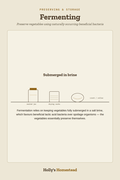
01Submerged in brine
Fermentation relies on keeping vegetables fully submerged in a salt brine, favouring beneficial lactic acid bacteria over spoilage organisms.
02What you'll need
- A fermenting crock or clean glass jar
- Non-iodised salt
- Filtered or dechlorinated water
- A weight to keep vegetables submerged under the brine
03Method
- 1. Prepare vegetables — sliced, shredded, or whole depending on the ferment.
- 2. Mix a brine of salt and water (concentration varies by recipe, typically 2–5%).
- 3. Pack vegetables into the jar or crock, covering fully with brine.
- 4. Weight the vegetables down to keep them fully submerged — exposure to air causes spoilage, not just fermentation.
- 5. Ferment at room temperature, tasting periodically, until the flavour reaches the desired point, then refrigerate to slow further fermentation.
04Troubleshooting
- Mould on the surface — usually from vegetables not staying fully submerged; ensure the weight is doing its job, and discard if mould is extensive.
- Too salty or not salty enough — measure brine concentration carefully; it affects both safety and flavour.
- Ferment too sour or not sour enough — taste periodically and refrigerate once it reaches the flavour you want; fermentation continues, just more slowly, in the fridge.
- Cloudy brine — usually normal (the bacteria doing their job), not a sign of spoilage on its own; judge primarily by smell and appearance of mould.
05Timing & maintenance
Best time
At harvest peaks for crops like cabbage, cucumber, and other vegetables suited to fermenting.
Duration
1–4 weeks depending on the ferment, temperature, and desired sourness.
Maintenance
Check submersion and smell every few days during active fermentation.
Signs of success
Pleasantly sour, tangy smell and taste, with bubbling activity visible during the active phase.
06Tips & variations
Pairs well with
Root CellaringCanning & BottlingCommon mistakes
Letting vegetables float above the brine, exposing them to air and mouldUsing iodised salt or chlorinated water, which can inhibit fermentationPro tip
Cabbage (for sauerkraut) is one of the most forgiving and reliable vegetables to start fermenting with.