Holly's Homestead — Dairy & Animal Products
Wool — From Fleece to Usable Yarn
Process raw fleece into spinnable, usable wool
DIFFICULTY Moderate
TYPE Seasonal batch technique
TIME Many hours per fleece, spread over sessions
TYPE Seasonal batch technique
TIME Many hours per fleece, spread over sessions
Difficulty
Moderate
Time
Many hours total
Cost
Low–moderate (tools)
Best Season
After shearing
Frequency
Once or twice a year per animal
01Skirt, wash, card, spin
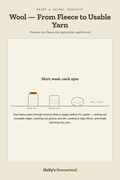
Raw fleece goes through several distinct stages before it's usable — skirting out unusable edges, washing out grease and dirt, carding to align fibres, and finally spinning into yarn.
02What you'll need
- Raw fleece from shearing
- A skirting table or clean flat surface
- Wool wash/scour and warm water for washing
- Hand cards or a drum carder
- A spinning wheel or drop spindle
03Method
- 1. Skirt the fleece, removing heavily soiled, matted, or short edge sections that won't process well.
- 2. Wash in warm (not hot, to avoid felting) water with a wool-specific scour, handling gently to avoid felting.
- 3. Dry thoroughly before further processing.
- 4. Card the wool (by hand or with a drum carder) to align fibres into a workable, even form.
- 5. Spin into yarn using a spinning wheel or drop spindle, then set the twist before use.
04Troubleshooting
- Wool felting during washing — water too hot or too much agitation; use warm water and handle gently, minimising movement.
- Difficulty carding — fleece not clean enough, or has too much remaining vegetable matter; wash more thoroughly and pick out debris beforehand.
- Uneven spun yarn — normal while learning; consistency in drafting (drawing out fibre) comes with practice.
- Fleece quality poor overall — quality varies significantly by breed, nutrition, and health of the animal; consider this when selecting or breeding for fibre production.
05Timing & maintenance
Best time
Process fleece reasonably soon after shearing, before it accumulates more contamination in storage.
Duration
A full fleece can take many hours across skirting, washing, carding, and spinning, often spread over multiple sessions.
Maintenance
Not applicable per event; ongoing skill development improves speed and consistency over time.
Signs of success
Clean, aligned fibre that spins evenly into a consistent, usable yarn.
06Tips & variations
Pairs well with
Sheep (animal guide)Common mistakes
Using water too hot during washing, causing the fleece to feltRushing the carding step, leading to a difficult, uneven spinPro tip
A drop spindle is a good, low-cost way to learn spinning before investing in a spinning wheel — the fundamental technique transfers directly.